Dr. Sutirtha Sahariah
  • Home
  • Training Facilitator
  • Areas of Expertise
  • Key Publications & Reports
  • Across the Lines
  • Blog
  • Contact
Dr. Sutirtha Sahariah

Dr. Sutirtha Sahariah

  • Home
  • Training Facilitator
  • Areas of Expertise
  • Key Publications & Reports
  • Across the Lines
  • Blog
  • Contact
find with me

Archives: Projects

  • Home
  • Projects
Supply Chain Management
Supply Chain Research
1807

Fair purchasing practices in garment supply chains.

Supply Chain Management

Fair purchasing practices in garment supply chains.

Fair purchasing practices in garment supply chains.

connecting theory and practice

Matthew Anderson, Tamsin Bradley, Sutirtha Sahariah

LIKE THIS 1807
VIEW PROJECT

connecting theory and practice

Matthew Anderson, Tamsin Bradley, Sutirtha Sahariah

Abstract
In this chapter, we investigate the experience of Fair Trade organisations and how they have translated Fair Trade principles into practice in their value chains. In particular, we focus on the implementation of responsible purchasing practices related to: Equal Partnership, Collaborative Production Planning and Fair Payment Terms. We argue that, if supported, Fair Trade organisations have the potential to be industry front-runners and demonstrate fair purchasing practices that can be replicated and scaled across the garment sector.

Policy Research
1007

Survivor engagement,  prevention and advocacy

Survivor engagement,  prevention and advocacy

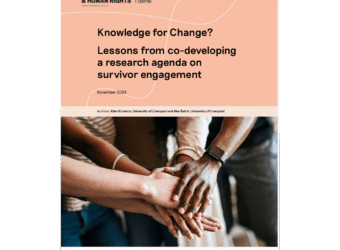
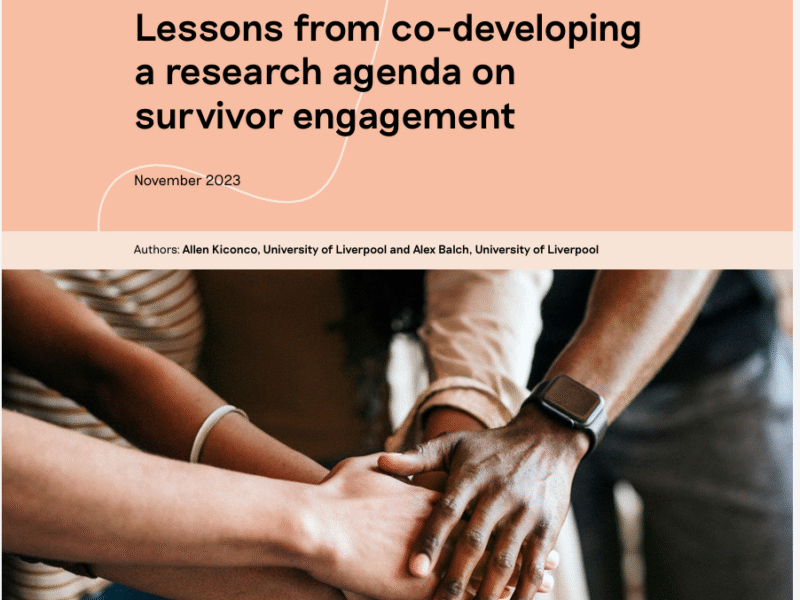
Knowledge for Change? Lessons from co-developing a research agenda on survivor engagement. November 2023.
Comprehensive review of promising practices across South Asia

LIKE THIS 1007
VIEW PROJECT

a case study from the frontline source area in India

View Research → | Read Policy Impact → | Read Reports from the Project →

Knowledge for Change?

November 2023

Introduction and context ‘Survivor engagement’, understood as the involvement of people with lived experience in policy and programming, has seemingly moved to the centre of efforts to address modern slavery and human trafficking, but how can it really shift the way that these issues are tackled? As practice in this area is underdeveloped, the production of knowledge is likely to be crucial in this, changing approaches and responses through the development of new concepts, interpretations, tools and instruments that can be embedded in policy and practice. This report presents a summary of new findings and reflections from an ongoing and collaborative initiative to develop a research agenda through the lens of survivor engagement. It builds on a project that explored promising practices of lived experience engagement in modern slavery policy and programming and which took place in 2022.1 Researchers at the University of Liverpool, with funding from Foreign, Commonwealth, and Development Office (FCDO), built an international network of researchers and consultants to explore effective methods and practices involving persons with lived experience in modern slavery policy and programming. Recognising the collaborative research’s significance, the network secured additional funding from the Modern Slavery and Human Rights Policy and Evidence Centre (Modern Slavery PEC) to expand their study between March and July 2023. This expansion enabled a deeper exploration of engagement with first-hand experience and expertise in policy and programme systems.

View Research → | Read Policy Impact → | Read Reports from the Project →

Sex Work, Labour and Empowerment
Book
523

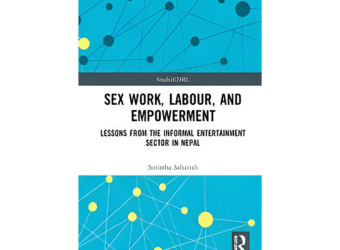
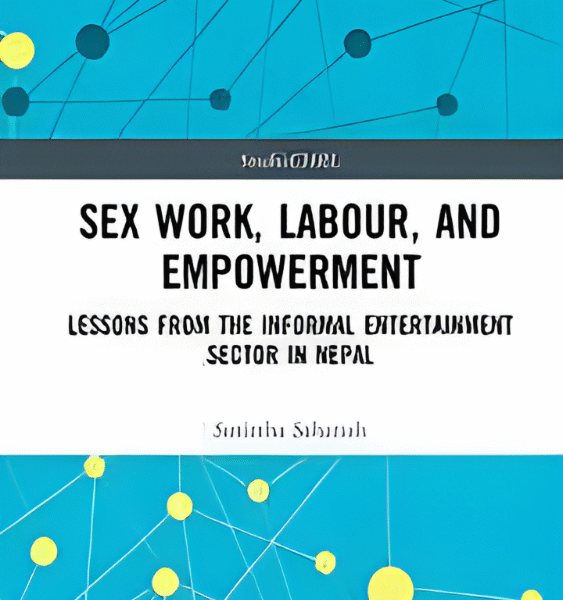
Sex Work, Labour, and Empowerment. Nepal (2022)

Sex Work, Labour, and Empowerment. Nepal (2022)

Published by Routledge – A groundbreaking study on women’s empowerment in Nepal’s informal entertainment sector.

Lessons from the Informal Entertainment Sector in Nepal (2022)

LIKE THIS 523
VIEW PROJECT

Available on Routledge →

Published by Routledge – A groundbreaking study on women’s empowerment in Nepal’s informal entertainment sector.

This book presents an analysis of the concepts of female empowerment and resilience against violence in the informal entertainment and sex industries.

Generally, the key debates on sex work have centred on arguments proposed by the oppressive and empowerment paradigms. This book moves away from such debates to look widely at the micro issues such as the role of income in the lives of sex workers, the significance of peer organisations and networks of women, and how resilience is enacted and empowerment experienced. It also uses positive deviancy theory as a useful strategy to bring about notable changes in terms of empowerment and agency for women working in this sector and also for addressing the wider issues of migration, HIV/AIDS, and violence against women and girls. The focus is on moving beyond a victimisation framework without downplaying the extent of the violence that women in this industry experience. It conceptualises the theories of empowerment and power which have not been tested against women who work in this sector, combined with in-depth interviews with women working in the industry as well as academics, activists, and personnel in the NGO and donor sector. In doing so, it informs the reader of the numerous social, political, and economic factors that structure and sustain the global growth of the industry and analyses the diverse factors that lead many thousands of women and girls around the world to work in this sector.

The work presents an important contribution to the study of citizenship and rights from a non-Western angle and will be of interest to academics, researchers, and policymakers across human rights, sociology, economics, and development studies.

Available on Routledge →

Recent Posts

  • Leveraging AI in Education for Foundational Learning in India
  • Explaining the AI Resilience and Adaptation Framework
  • Deconstructing India’s AI Governance Framework
  • AI Governance & Safety Vocabulary List
  • Lessons in AI Biases from Amsterdam and Beyond

Recent Comments

No comments to show.

Archives

  • January 2026
  • December 2025
  • October 2025
  • September 2025
  • March 2015

Categories

  • AI

Featured posts

Leveraging AI in Education for Foundational Learning in India
Leveraging AI in Education for Foundational Learning
  • January 11, 2026
  • 9 min read
Explaining the AI Resilience and Adaptation Framework
  • January 7, 2026
  • 9 min read
Deconstructing India’s AI Governance Framework
  • December 4, 2025
  • 6 min read

Categories

  • AI

Find Me

Tags

AI Ai Bias AiEthics Ai Future AiGovernance Ai Governance Ai Policy Ai Tools Digital Transformation Generative Ai Revolution Generative Ai Use Cases